

The grief math changed this year
It still hurts. It’s still love.

I have been Jamie’s widow for longer than I was his wife. We were married for eight years. Tomorrow marks nine years since he died.
Of all the grief math I’ve done, this might be the most painful.
I knew this shift was coming. But knowing hasn’t made the reality any less disorienting. It feels like another loss. A surrender. Death keeps taking.
I had a hard time writing today’s post. I knew I wanted to acknowledge this bizarre milestone — or, at least, I told myself I should. But the acknowledgement is painful, and so is the writing. I’ve been battling myself on the page, drafting and deleting, trying to decide whether pressing on this familiar bruise is useful at all.
So, you might ask, why do the math? Why write about it? Why keep returning if it hurts?
These are good questions. I’m not sure I have neat answers. But I’m going to try.
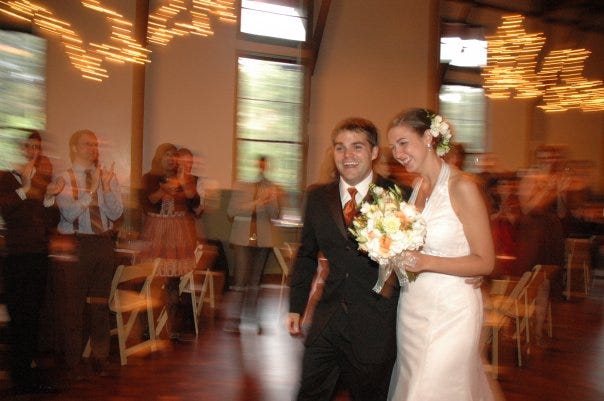
Jamie’s death changed everything about my life. Once I made it through basic survival mode — learning that life was, in fact, worth living without him — I began making choices that led to the life I live now: here in Atlanta, with a partner and child, freelancing and writing, loosening my grip on old beliefs about work and worth.
It’s a life informed and deepened by sadness. It’s a beautiful life.
I sometimes feel guilty about that. I wouldn’t be here if Jamie hadn’t died. I wouldn’t be writing to you if I didn’t know this kind of loss. There’s a clear before and after in my life, and nine years later, the distance between those versions of me is hard to comprehend.
Nothing makes that distance more apparent than meeting new people — people who have no idea I’m a widow, who don’t know the other life I once lived. It stuns me that there are people who know Jamie only in retrospect; they’ll never know the dynamic person he was.
Jamie found joy in everything: a complex cup of coffee, a goofy-sweet dog, a well-crafted punchline, a stunning movie. He was always challenging himself to master something new — not because he didn’t think he was good enough, but because learning delighted him. He was generous with his time and attention. When he was in a good mood, being around him felt like basking in warm sunshine.
Here I am, reaching again for words about a person frozen in time. I circled these thoughts as I drafted this post — typing and deleting, typing and deleting. I worried how tired the subject might seem, how stuck I might appear, how out of touch it might be to write about a nearly decade-old wound when there are fresh losses every day, how strange it may seem to keep bringing up the same dead person when I am lucky enough to be building a life with someone else I love.
Then I thought about the readers quietly carrying their own losses. People who wonder if they’re grieving too long or too loudly — or perhaps not enough. People who worry there’s something wrong with them, that they’re doing this all the wrong way.
Every time I write about grief, I write for these people. I am this person. I might always be, to some degree. I still care what others think more than I want to admit. I still have days when it’s hard to ignore those taunting inner voices: you are stuck, you are pitiful, you don’t have anything new to say.
Sooner or later, I snap out of it. I answer those voices with the same message I want to impart to readers: there’s no wrong way to do this. It’s all an expression of love.
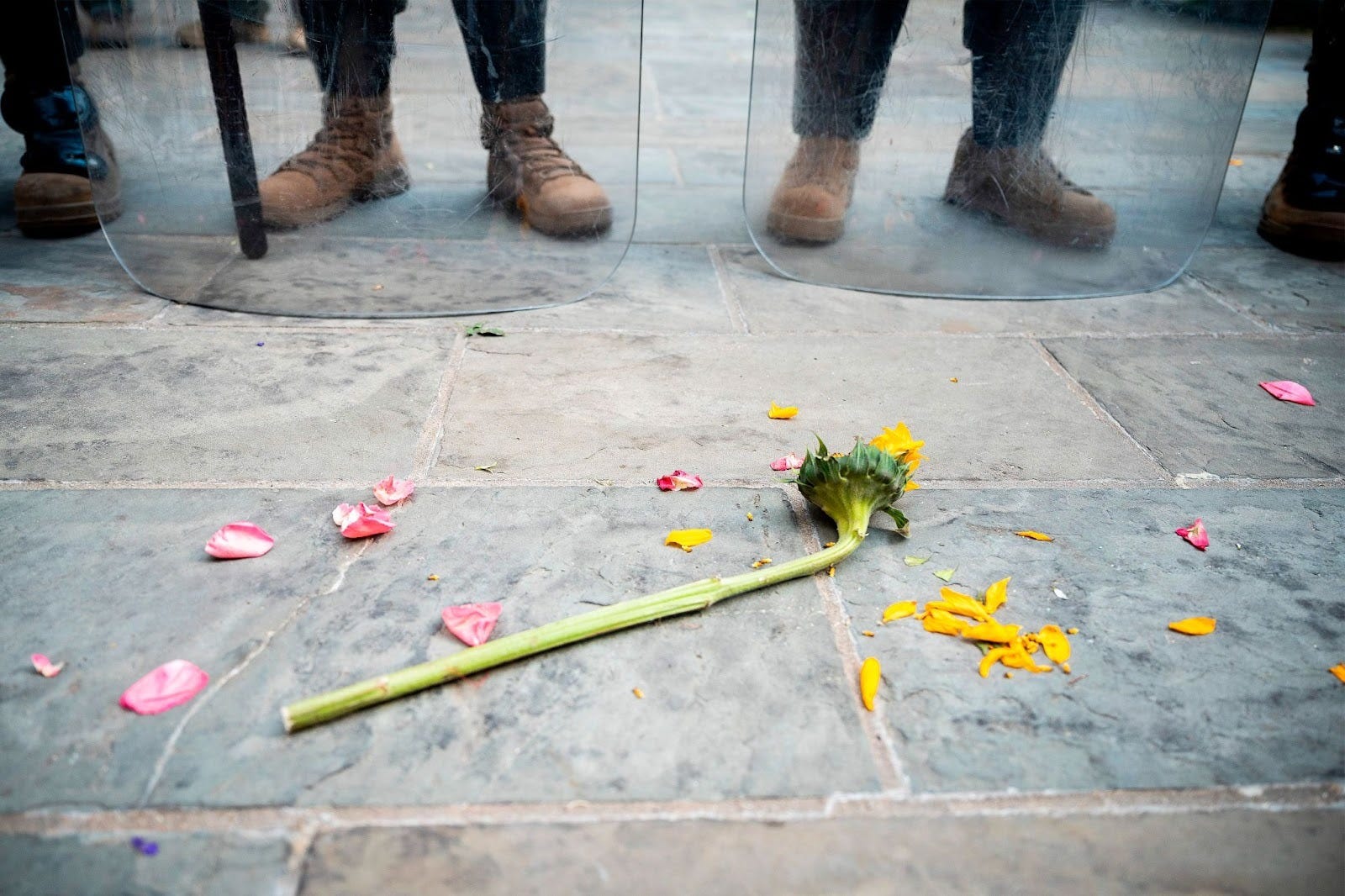
“Everything that you’re feeling right now, name it love. Whether it’s fear, or sadness — everything that you’re feeling, name it love.”
These words, attributed to the late poet Andrea Gibson, have been circling the internet lately. They come from the documentary Come See Me In the Good Light, where Andrea’s ex-girlfriend recalls how Andrea helped her reframe her father’s death.
I like to think Andrea would be okay with this idea traveling far beyond its source. The words are resonating right now because so many of us are fearful. So many of us are sad. So many of us are carrying rage with nowhere to put it.
Remember: it’s all love.
I do a pretty good job of shielding myself from high-profile deaths captured on film. I haven’t seen the footage of George Floyd or Renee Nicole Good or Alex Pretti’s final moments. I know enough. What I can’t shield myself from is thinking about all the people left behind — the parents, the siblings, the coworkers, the children. God, the children. When you’ve lived with devastating loss, you want to protect everyone who has no choice but to carry that weight.
Deep grief teaches you what it means to be alive in a broken world. It helps me understand people in ways I couldn’t before. Most days, that feels like a superpower. Sometimes, it’s a heavy thing to carry. I see grief in its many forms: the grief of an unrealized dream, a dissolved friendship, a country that feels like it’s falling apart.
Some people stay stuck in their grief. Others move forward. Most of us shift back and forth between those poles, depending on the day and our capacity. We dive deep into the loss — pressing on that bruise of the heart — and then we let go. We close the browser. We close our eyes. We close the book filled with bittersweet pictures. We allow ourselves to breathe.
Grief is love. Grief is love. Grief is love. The anger you’re feeling? The hopelessness? The despair, the frustration, that bizarre burst of joy? It’s all love. If you are having a hard time, say those three words to yourself. If someone you know is carrying their own grief, say this mantra for them. If you are overwhelmed by what seems like a broken world, say it like a prayer.
Grief is love. And love is powerful.
So here I am, nine years later, letting you know I still have a hard time with this anniversary. I still have intense crying spells and breath-catching dreams. I still wonder if I’m doing this right. When I learn about someone dying — someone I know or a highly publicized tragedy — I think of Jamie. I think of how heavy it all is. Some days I don’t think about Jamie at all, and then I feel guilty when I notice that. Other days I press on the bruise because the pain keeps him close.
What I try not to do is judge myself for any of it.
Nine years later, it’s all love.
xoxo
KHG
Just the other day I was thinking about what age I would be when I will have been without my mom longer than I had her in my life, so this essay hit right on time (as many of yours do). While we have never met in real life, I saw you speak at Creative Mornings closer to when you lost your husband and have been reading about your grief journey ever since. No matter how flawed it sometimes may feel, or how much you second guess yourself, I would like to remind you that this work you have been doing is meaningful to many people like me. You helped me navigate and make sense of my own grief, helped me feel less alone, and helped me reframe it as a life experience that has helped mold me into the person I am today. I'm glad you're still here sharing with us and I hope you continue to do so for years to come. Xox
Thank you so much for sharing. this, Katie. My great loss is my 52-year-old son who was blown away 3 1/2 years ago by a hit-and-run driver when cycling home from an early morning ride with his twin brother in Denver. As a mother, I know my grief is different from yours, but your beautiful words resonate very deeply. I will be visiting my beloved widowed daughter-in-law in a couple of weeks, and I'm sure we'll have a good cry together. Your words mean a lot to me, and I often share them with her. This is an especially moving reflection on loss, and again, I thank you for sharing it.